
Best AI Legal Assistants to Consider in 2026
Table of Contents
- Introduction
- Understanding AI Legal Assistant Categories and Risk Profiles
- CoCounsel: Thomson Reuters’ GPT-4 Powered Legal AI
- Harvey AI: Enterprise-Only Custom Legal LLMs
- Clio Duo: Practice Management-Integrated AI
- Lexis+ AI: LexisNexis’ Research-Focused Assistant
- Westlaw Precision with AI-Assisted Research
- Ross Intelligence: The Rise and Fall Case Study
- ChatGPT and Claude: Powerful but Dangerous for Legal Work
- Specialty AI Legal Assistants for Specific Practice Areas
- Document Review AI: eDiscovery and Contract Analysis
- Ethical Requirements and Oversight Obligations
- Pricing Models and Total Cost Analysis
- Bottom Line
- Introduction
- Understanding AI Legal Assistant Categories and Risk Profiles
- CoCounsel: Thomson Reuters’ GPT-4 Powered Legal AI
- Harvey AI: Enterprise-Only Custom Legal LLMs
- Clio Duo: Practice Management-Integrated AI
- Lexis+ AI: LexisNexis’ Research-Focused Assistant
- Westlaw Precision with AI-Assisted Research
- Ross Intelligence: The Rise and Fall Case Study
- ChatGPT and Claude: Powerful but Dangerous for Legal Work
- Specialty AI Legal Assistants for Specific Practice Areas
- Document Review AI: eDiscovery and Contract Analysis
- Ethical Requirements and Oversight Obligations
- Pricing Models and Total Cost Analysis
- Bottom Line
Introduction
The AI legal assistant scene has matured, yet the gap between marketing promises and courtroom reality is significant. Some AI legal assistants are designed for legal work with safeguards, while others are general tools that hallucinate citations up to 82%. This guide covers twelve AI legal assistant options in 2026, focusing on accuracy, defensibility, and ethical compliance under ABA Model Rules 1.1, 3.3, and 5.3.
Understanding AI Legal Assistant Categories and Risk Profiles
AI Legal Assistant Risk Profiles:
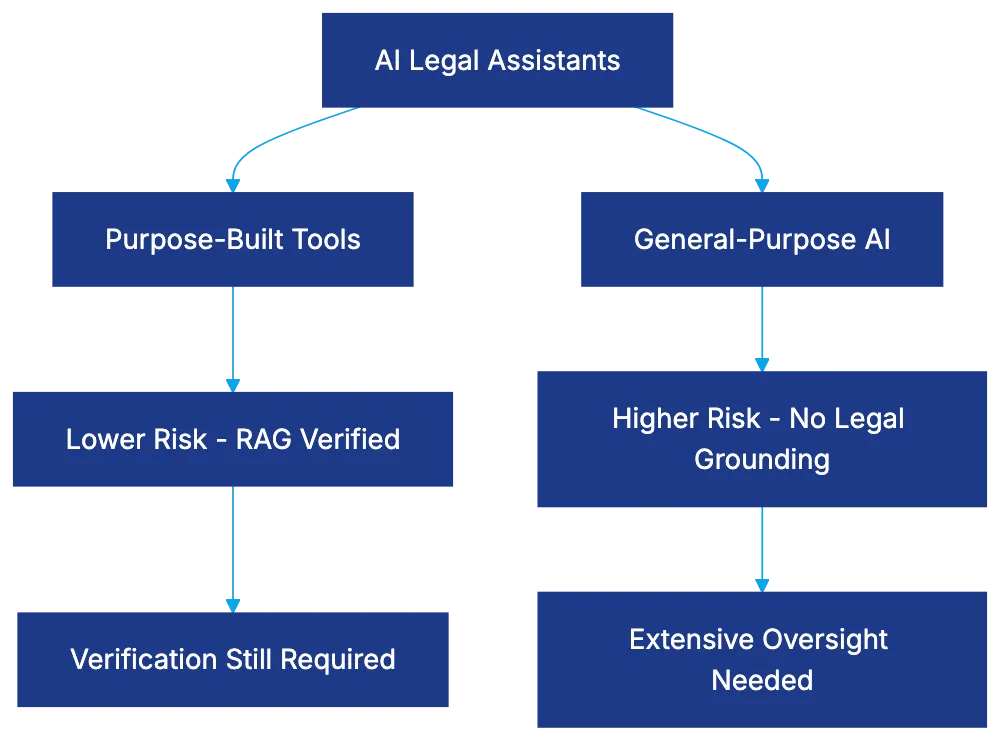
Not all AI legal assistants have the same risk profile, crucial in legal practice. Purpose-built tools like CoCounsel and Harvey AI use retrieval-augmented generation (RAG) for verified legal databases. However, hallucination rates persist, with Lexis+ AI and Westlaw AI producing 17-34% hallucination rates. General-purpose assistants like ChatGPT and Claude lack legal grounding, showing hallucination rates of 49-82%. The Mata v. Avianca case highlights these risks, with a database tracking 486+ similar cases where AI errors reached court filings.
CoCounsel: Thomson Reuters’ GPT-4 Powered Legal AI
CoCounsel leverages GPT-4 with a model-agnostic architecture, grounded in Westlaw content, and applies KeyCite flags. Though its Deep Research feature autonomously executes research plans, citation verification is crucial. Pricing integrates with Westlaw subscriptions, costing $500-$1,000 per user monthly. Best for preliminary research, it struggles with advanced issues or jurisdictional variations. According to ABA Formal Opinion 512, attorney review is necessary.
Harvey AI: Enterprise-Only Custom Legal LLMs
Harvey AI uses custom models trained on extensive U.S. case law, suitable for enterprise but expensive, with starting prices at $50,000 annually. It employs a cascading architecture, with verification systems to tackle the hallucination problem. Harvey isn’t accessible for smaller firms, focused on AmLaw 200 firms and corporate legal departments.
Clio Duo: Practice Management-Integrated AI
Clio Duo embeds AI within the Clio system, providing productivity gains in time entry and data integration, priced at $70 per user monthly. The context-aware design assists in client communication and document drafting, with lower risks than legal research tools.
Lexis+ AI: LexisNexis’ Research-Focused Assistant
Lexis+ AI, grounded in Lexis content, provides research memos and case identification. Despite legal grounding, hallucination rates of 17-34% necessitate verification. Pricing adds $500-$1,200 per user monthly, integrating well with Lexis workflows but not ideal for niche areas.
Westlaw Precision with AI-Assisted Research
Westlaw Precision offers AI-assisted research with conservative integration, focusing on Boolean search with AI enhancements in analytics and traditional workflows. Pricing varies, but AI features often add no extra fees.
Ross Intelligence: The Rise and Fall Case Study
Ross Intelligence, though defunct, illustrated risks in AI legal assistants. It faced legal challenges over content sourcing, highlighting the importance of evaluating company stability and data practices in AI tool selection.
ChatGPT and Claude: Powerful but Dangerous for Legal Work
General-purpose AI like ChatGPT and Claude offer impressive functions but are risky for legal research without safeguards due to high hallucination rates. Suitable for tasks with lower hallucination risk, they still require careful oversight under ABA rules.
Specialty AI Legal Assistants for Specific Practice Areas
Tools like PatentPal and Spellbook cater to specific practice areas, providing targeted capabilities, while EvenUp focuses on negotiation positioning, illustrating diverse AI applications beyond research.
Document Review AI: eDiscovery and Contract Analysis
Document review AI from Relativity, Disco, and others use machine learning for document prioritization and analysis, with established accuracy rates. Contract analysis AI, like Kira Systems and Luminance, offers different ethical considerations by analyzing existing documents.
Ethical Requirements and Oversight Obligations
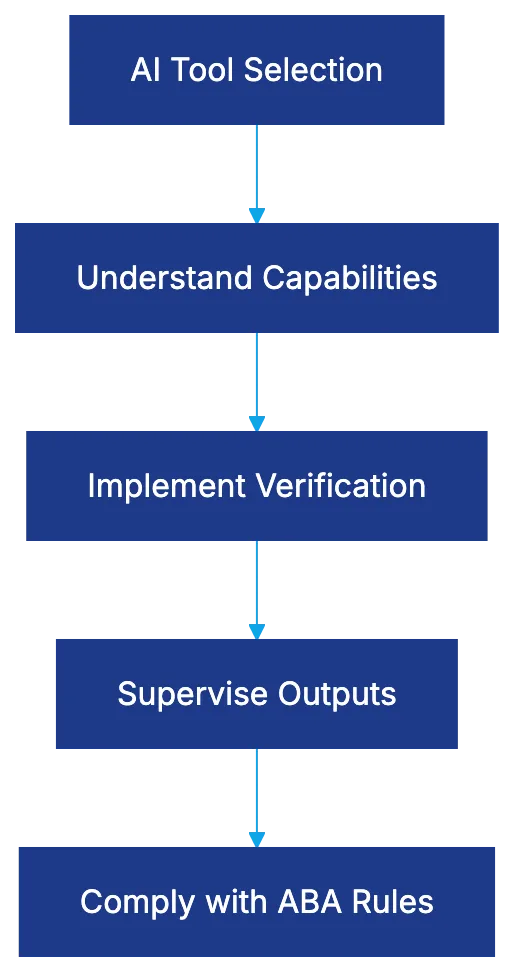
ABA Formal Opinion 512 outlines the ethical obligations, requiring understanding of AI tools and verification of their outputs. Supervision and verification are essential, especially under Rules 1.1, 3.3, and 5.3.
Ethical Compliance Framework:
Pricing Models and Total Cost Analysis
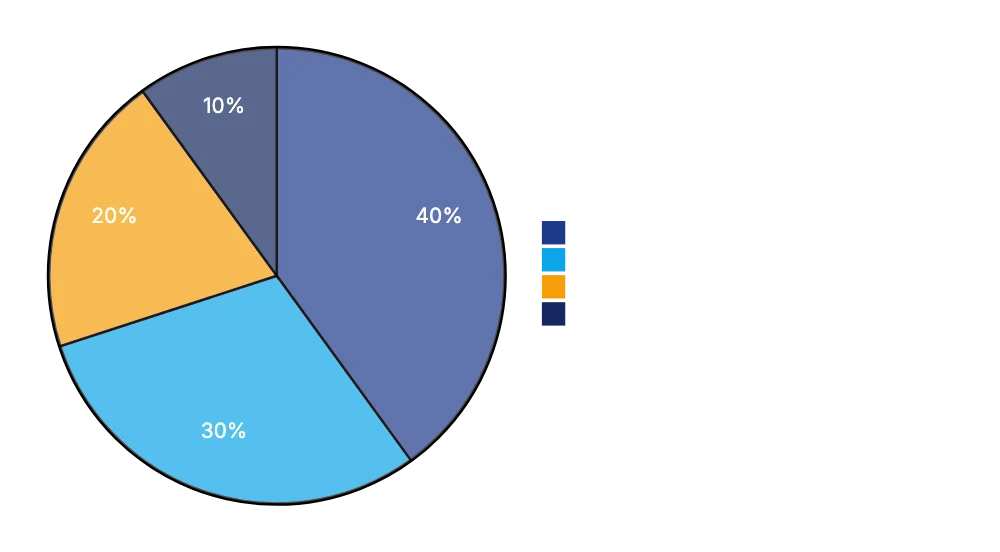
AI legal assistant pricing varies, with subscription models like CoCounsel and Lexis+ AI adding significant costs atop existing fees. Harvey AI’s enterprise licensing is costly, while general-purpose tools are cheap but require manual verification, impacting cost-effectiveness.
Bottom Line
Pricing Model Comparison:
The best AI legal assistant depends on practice focus and firm needs. Purpose-built tools like CoCounsel offer better accuracy, while General-purpose AI serves specific lower-risk tasks. Understanding AI limitations and implementing verification protocols are crucial for safe use.
Frequently asked questions
How do I choose the right AI legal assistant for my firm?
Consider your firm’s specific needs and practice focus. Purpose-built tools like CoCounsel or Harvey AI may offer greater accuracy for legal research, while general-purpose tools like ChatGPT are better suited for simpler tasks. Evaluate pricing models and ensure the tool complies with ABA ethical requirements.
What are the main risks associated with using AI legal assistants?
The primary risks include high hallucination rates, which can lead to inaccurate legal output. Purpose-built AI assistants tend to have lower rates, but oversight is still necessary to verify results. Failing to do so can result in detrimental outcomes in legal proceedings.
Are there specific ethical guidelines I should be aware of when using AI in legal practice?
Yes, compliance with ABA Model Rules 1.1, 3.3, and 5.3 is crucial. These rules mandate a thorough understanding of AI tools and verification of their outputs to ensure competence and integrity in legal work. Regular supervision over AI-generated content is also essential.
What is the cost range for an AI legal assistant?
Pricing varies significantly based on the tool and its capabilities. For example, tools like CoCounsel and Lexis+ AI range from $500 to $1,200 per user monthly, while enterprise-level solutions like Harvey AI start at $50,000 annually. General-purpose tools may have lower costs but require verification efforts that could add to total expenses.
Can AI legal assistants handle complex legal issues?
AI legal assistants are generally better suited for preliminary research and commonly handled tasks. Tools like CoCounsel may struggle with complex or jurisdiction-specific issues, emphasizing the need for human oversight, particularly in difficult cases. Always assess the specific capabilities of the AI tool you are considering.
What specific tasks can I safely assign to general-purpose AI like ChatGPT?
General-purpose AI can be used for administrative tasks, drafting emails, or generating summaries, provided these tasks are carefully reviewed by legal professionals. However, due to their high hallucination rates, they should not be relied upon for legal research or critical analyses without thorough verification.
How do I ensure compliance and oversight when using AI legal assistants?
Establish protocols for verifying AI outputs, ensuring all work generated is reviewed by qualified legal professionals. Stay informed about the ethical guidelines set forth by the ABA and engage in continuous training regarding AI tools. Regular audits of AI use in practice can help maintain compliance and mitigate risks.