
Review of LEGALFLY AI for Contract Analysis
Table of Contents
- Introduction
- LEGALFLY AI Contract Review Capabilities
- Supported Contract Types and Use Cases
- LEGALFLY Pricing and Market Positioning
- User Experience and Workflow Integration
- Accuracy Rates and Performance Benchmarks
- Language Support and International Capabilities
- Competitor Comparison: LegalOn, Spellbook, and Kira
- Target Market Fit and Best Use Scenarios
- Limitations and Competitive Disadvantages
- Security, Compliance, and Data Handling
- Real User Feedback and Market Reception
- Bottom Line
- Introduction
- LEGALFLY AI Contract Review Capabilities
- Supported Contract Types and Use Cases
- LEGALFLY Pricing and Market Positioning
- User Experience and Workflow Integration
- Accuracy Rates and Performance Benchmarks
- Language Support and International Capabilities
- Competitor Comparison: LegalOn, Spellbook, and Kira
- Target Market Fit and Best Use Scenarios
- Limitations and Competitive Disadvantages
- Security, Compliance, and Data Handling
- Real User Feedback and Market Reception
- Bottom Line
Introduction
Contract review is a time-intensive task in legal practice, with attorneys spending hours identifying issues and ensuring compliance. LEGALFLY AI promises to simplify this process through automated contract analysis and issue identification. This review examines LEGALFLY’s capabilities, pricing, accuracy, and comparisons with competitors like LegalOn, Spellbook, and Kira Systems.
LEGALFLY AI Contract Review Capabilities
LEGALFLY Contract Review Process:
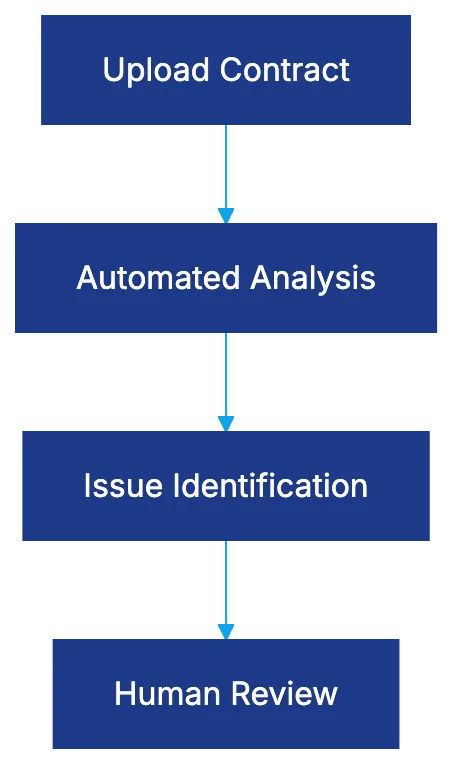
LEGALFLY reduces manual review time by automating contract analysis. It identifies potential contract issues, flags risky clauses, and extracts specific provisions like confidentiality clauses and payment terms. This allows users to focus on critical areas without reading entire contracts. LEGALFLY also provides contextual analysis against market standards, generating summaries of key terms.
Supported Contract Types and Use Cases
LEGALFLY is effective for standard agreements such as NDAs, service agreements, and vendor contracts. It can extract key clauses from employment and software agreements, though it’s less effective for highly specialized agreements requiring industry-specific knowledge.
LEGALFLY Pricing and Market Positioning
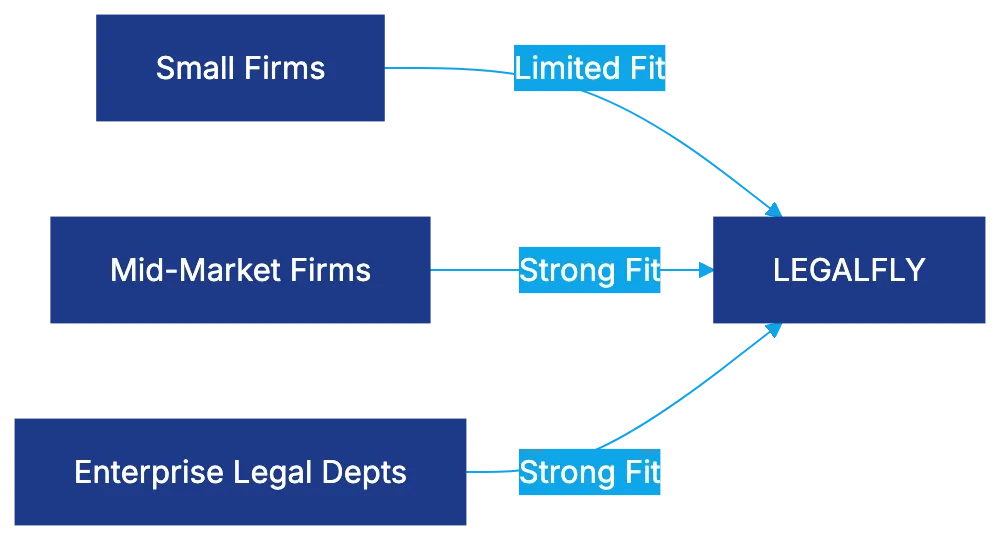
LEGALFLY targets mid-market and larger firms with enterprise pricing models. It requires custom quotes and annual subscriptions, positioning LEGALFLY for organizations with high contract volumes. Smaller firms may find the cost unjustifiable.
LEGALFLY Market Positioning:
User Experience and Workflow Integration
LEGALFLY prioritizes simplicity, allowing quick contract processing. The platform doesn’t require extensive setup, though sophisticated custom uses demand deeper knowledge. Workflow integration is limited, with LEGALFLY functioning as a standalone platform rather than embedding within existing systems.
Accuracy Rates and Performance Benchmarks
Third-party accuracy benchmarks are not published, but user feedback indicates reliability for standard provision identification. Issue identification varies, requiring human judgment for subtle contexts. False positives occur, highlighting the importance of human review.
Language Support and International Capabilities
LEGALFLY primarily operates in English, providing reasonable analysis for US and UK contracts. Multi-language support is limited, making it less suitable for multinational operations needing analysis in diverse languages.
Competitor Comparison: LegalOn, Spellbook, and Kira
Competitive Landscape Comparison:
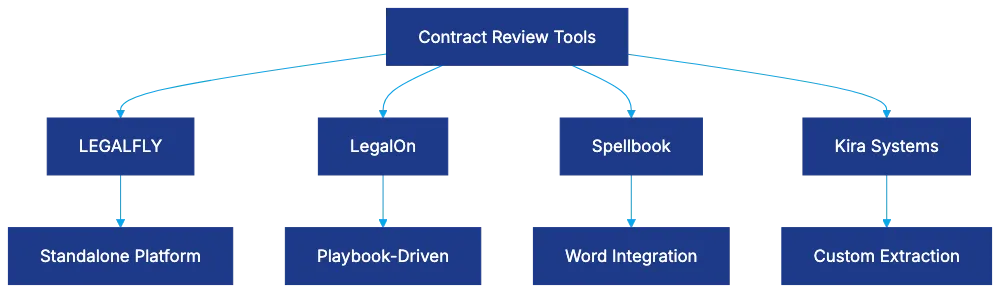
LegalOn offers detailed playbook-driven review capabilities, while Spellbook integrates seamlessly within Microsoft Word. Kira allows customizable extraction, making it suitable for specialized practices. LEGALFLY lacks deep customization for unique negotiation positions.
Target Market Fit and Best Use Scenarios
LEGALFLY is ideal for mid-sized to large legal departments handling high volumes of standard agreements. It suits transactional practices focusing on volume rather than complexity, providing meaningful time-savings on contract review.
Limitations and Competitive Disadvantages
LEGALFLY’s standalone architecture creates workflow friction, and its customization capabilities lag behind competitors. The platform provides individual contract review, lacking detailed reporting and analytics for strategic analysis.
Security, Compliance, and Data Handling
LEGALFLY offers SOC 2 certification and standard encryption practices. Data retention policies support compliance, though contract data’s use for AI training requires clarification in negotiations.
Real User Feedback and Market Reception
User feedback emphasizes LEGALFLY’s effectiveness for standard agreements but notes limited customization and workflow friction. The vendor’s responsiveness to feedback varies, with transparency being a concern during evaluation.
Bottom Line
LEGALFLY provides solid performance for high-volume standard agreements, with SOC 2 certification ensuring data security. Strong competitors exist with greater customization and integration options. Legal departments should evaluate LEGALFLY carefully, insisting on trial periods with specific contracts before committing.
Frequently asked questions
What types of contracts can LEGALFLY effectively analyze?
LEGALFLY is capable of analyzing standard agreements such as NDAs, service agreements, and vendor contracts. It can also handle employment and software agreements, but may struggle with highly specialized contracts that require in-depth industry knowledge.
How does LEGALFLY's pricing compare to its competitors?
LEGALFLY employs an enterprise pricing model that requires custom quotes and annual subscriptions, targeting mid-market and larger law firms. Smaller firms may find the costs not justifiable compared to competitors like LegalOn and Spellbook, which may offer different pricing structures or integration features.
Can LEGALFLY integrate with existing document management systems?
LEGALFLY functions primarily as a standalone platform and does not offer extensive integration capabilities with existing systems. Users looking for seamless workflow integration may need to consider other solutions that embed directly within their current document management tools.
What should users be cautious about when using LEGALFLY?
Users should be aware that while LEGALFLY is generally reliable for standard provision identification, there can be false positives and inaccuracies in issue detection. Human judgment is essential for reviewing subtle contract contexts to ensure compliance and address potential issues adequately.
Is LEGALFLY suitable for international contracts?
LEGALFLY primarily operates in English, making it best suited for US and UK contracts. Its limited multi-language support may hinder analysis for organizations dealing with diverse or multinational agreements.
What certification does LEGALFLY have regarding data security?
LEGALFLY holds SOC 2 certification, which indicates compliance with data security practices. Additionally, it utilizes standard encryption methods and has established data retention policies to support compliance requirements.
How should legal teams evaluate LEGALFLY before committing?
Legal departments should conduct meticulous evaluations of LEGALFLY by insisting on trial periods that involve specific contracts relevant to their needs. This allows teams to assess the platform’s effectiveness and compatibility with their unique workflows before making any long-term commitments.