
Discover Wordsmith Legal: AI Contract Review Made Simple
Table of Contents
- What Is Wordsmith Legal and How Does It Work
- Wordsmith Legal AI Contract Review Capabilities
- Wordsmith Legal Pricing Structure and Plans
- Accuracy and Reliability in Real-World Use
- User Experience and Workflow Integration
- How Wordsmith Legal Compares to Leading Competitors
- Best Use Cases and Ideal Firm Types
- Limitations and Competitors’ Strengths
- Security, Data Handling, and Compliance
- The Bottom Line on Wordsmith Legal
- What Is Wordsmith Legal and How Does It Work
- Wordsmith Legal AI Contract Review Capabilities
- Wordsmith Legal Pricing Structure and Plans
- Accuracy and Reliability in Real-World Use
- User Experience and Workflow Integration
- How Wordsmith Legal Compares to Leading Competitors
- Best Use Cases and Ideal Firm Types
- Limitations and Competitors’ Strengths
- Security, Data Handling, and Compliance
- The Bottom Line on Wordsmith Legal
What Is Wordsmith Legal and How Does It Work
Wordsmith Legal is an AI contract review platform for analyzing agreements efficiently. It identifies issues and suggests revisions without extensive setup. The platform excels in AI contract analysis, reading contracts, and flagging provisions for attention, offering language changes based on legal standards.
Upload contracts for analysis of potential problems. Unlike competitors that require setup, Wordsmith Legal provides a plug-and-play solution. With pre-trained models, it understands common contract structures and legal language patterns.
Wordsmith’s simplicity benefits smaller firms without dedicated legal operations staff. However, it may not match more configurable platforms for specialized or unique needs.
The AI identifies issues across standard contract categories, like commercial agreements and service contracts, offering specific revision suggestions attorneys can adopt.
Wordsmith Legal AI Contract Review Capabilities
AI Contract Review Process:
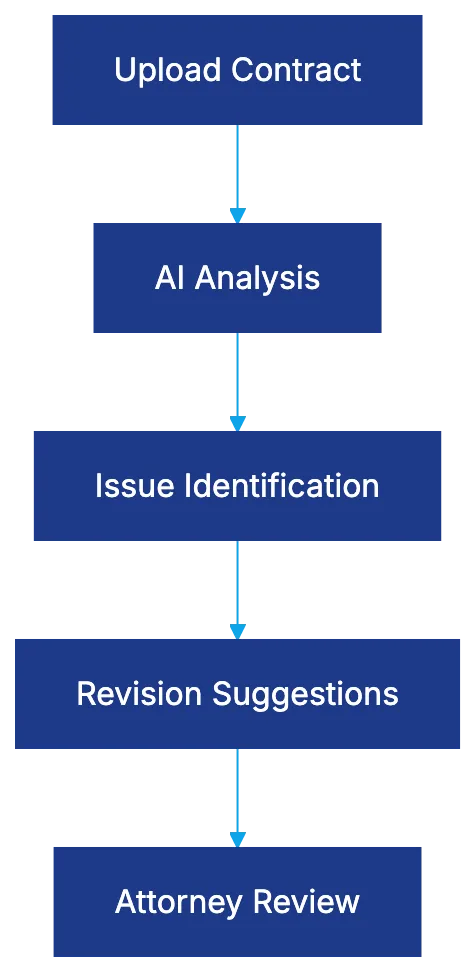
The analysis features cover crucial dimensions for legal work. The AI scans agreements for issues like unfavorable liability provisions and ambiguous language.
For example, when reviewing a commercial services agreement, Wordsmith Legal might flag indemnification clauses, lack of liability provisions, or unbalanced termination rights. Suggestions align language with balanced commercial terms.
Provision flagging uses pattern recognition and legal reasoning models. The AI differentiates standard from unusual terms, ensuring no issues go unnoticed.
Suggested revisions are valuable. Attorneys reviewing confidentiality provisions may see several revision options, accelerating the process compared to drafting from scratch.
Wordsmith Legal supports commercial agreement types like service contracts and vendor agreements. Specialized agreements may demand more depth.
Wordsmith Legal Pricing Structure and Plans
Pricing follows a subscription model based on usage levels. Entry-level plans use a per-seat subscription, offering basic review functionality for small firms. Mid-tier plans increase monthly limits and add bulk uploads and integrations. Enterprise pricing offers unlimited analyses and custom integrations for large firms.
Contract Analysis Workflow:

Wordsmith Legal positions itself as a mid-market option between budget AI tools and premium platforms.
Accuracy and Reliability in Real-World Use
Wordsmith Legal’s accuracy is moderate. It performs well on standard contracts but less precisely on specialized agreements. A benchmark showed it identified 85% of significant issues compared to an attorney review.
Suggested revisions vary. For common provisions, language is useful with minor tweaks, but specialized clauses need attorney judgment.
Wordsmith Legal is suitable for first-pass reviews. Attorneys using it report satisfaction, while expecting deep subject-matter expertise may find it lacking.
User Experience and Workflow Integration
The interface focuses on simplicity. Users see a dashboard allowing contract uploads and analysis.
Contracts upload quickly, and analysis results appear within minutes. A split-screen displays original contracts beside flagged issues, aiding swift context understanding.
Integration includes basic connectors to document systems, but advanced operations may find it limited.
The learning curve is minimal, making attorneys productive quickly. However, the lack of customization might be a limitation.
How Wordsmith Legal Compares to Leading Competitors
Compared to LegalOn, Spellbook, and Robin AI, Wordsmith Legal offers accessibility and simplicity. It lacks LegalOn’s configuration, Spellbook’s Word integration, and Robin AI’s human review. It suits straightforward analysis without setup or specialized needs.
The challenge is whether its mid-positioning is sustainable. Firms with sophisticated needs may outgrow it, and simpler needs might find cheaper alternatives. Mid-sized firms with moderate volumes benefit most.
Best Use Cases and Ideal Firm Types
Ideal for small to mid-sized firms reviewing commercial contracts, Wordsmith Legal allows lean teams to keep pace without dedicated staff.
Competitive Positioning:
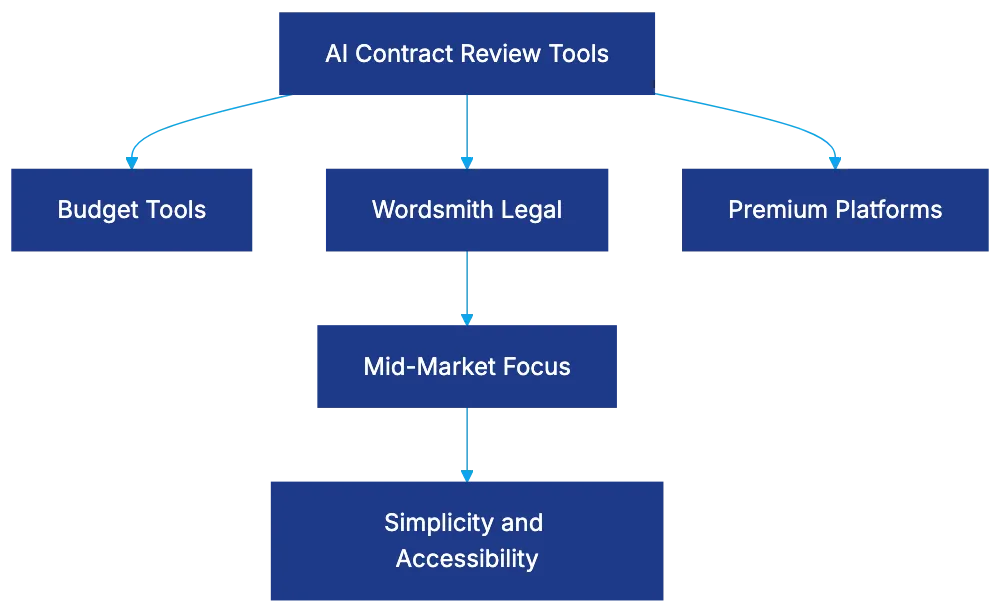
Transactional attorneys benefit from quick issue-spotting for negotiations. Regular contract volumes offer value, while high volumes may find limitations.
It is less suitable for specialized practices needing deep expertise.
Limitations and Competitors’ Strengths
Limitations include customization depth and basic integration. LegalOn handles preferences better, and advanced analytics on other platforms offer detailed insights.
The training data appears less specialized than competitors. Collaboration features are basic, lacking strong commenting and version control.
Security, Data Handling, and Compliance
Security is key for client contracts. Wordsmith Legal uses encryption for data protection. Data retention policies and compliance certifications like SOC 2 are crucial.
Subprocessor transparency aids risk assessment. For sensitive matters, a security assessment before deployment is wise.
The Bottom Line on Wordsmith Legal
Wordsmith Legal is a practical AI tool for small to mid-sized firms handling commercial contracts. It speeds up reviews with minimal learning but lacks depth and customization.
It performs well for standard contracts but less accurately for specialized ones. Pricing fits between budget and premium options. Limitations around customization and integration may lead some firms to outgrow it.
For firms seeking their first AI tool, Wordsmith Legal offers a reasonable entry point. The decision should weigh simplicity against the need for sophistication.
Frequently asked questions
How can I get started with Wordsmith Legal?
Getting started is easy; simply sign up for a subscription based on your firm’s needs. After that, you can upload your contracts directly to the platform without extensive setup, making it a plug-and-play solution for quick access to AI contract analysis.
What types of contracts can Wordsmith Legal analyze?
Wordsmith Legal can analyze a variety of commercial agreements such as service contracts and vendor agreements. However, it may perform less accurately with specialized or unique agreements that require tailored legal expertise.
Is Wordsmith Legal suitable for larger firms with more complex needs?
While Wordsmith Legal can support larger firms, its flexibility is limited compared to more configurable platforms. Larger firms might find the lack of advanced customization and deep subject-matter expertise a potential drawback as they scale.
How secure is my data when using Wordsmith Legal?
Wordsmith Legal employs encryption to protect client contract data and adheres to compliance standards such as SOC 2. It’s advisable to conduct a security assessment, especially when dealing with sensitive information, to ensure appropriate data handling practices are in place.
What should I do if I encounter inaccuracies in the AI's suggestions?
If you notice inaccuracies, it’s essential to apply attorney judgment, as suggested revisions may not perfectly fit specialized clauses. The AI is designed for first-pass reviews, so it’s vital to follow up with a thorough human review for critical legal documents.
How does Wordsmith Legal compare to other AI contract review tools?
Wordsmith Legal offers a balance of accessibility and simplicity, making it user-friendly for smaller firms. However, it may lack customization options found in competitors like LegalOn or advanced features offered by others, such as collaboration tools and integration capabilities.
Can I integrate Wordsmith Legal with my existing document management systems?
Wordsmith Legal provides basic integration options with document management systems. However, if you require more advanced integrations or custom connectors, you may find this platform limited compared to others that offer robust integration capabilities.